
Personal Care & Support Services
Hands-on help with bathing, dressing, moving and the daily routines a child needs support with.
Overview
What This Service Includes
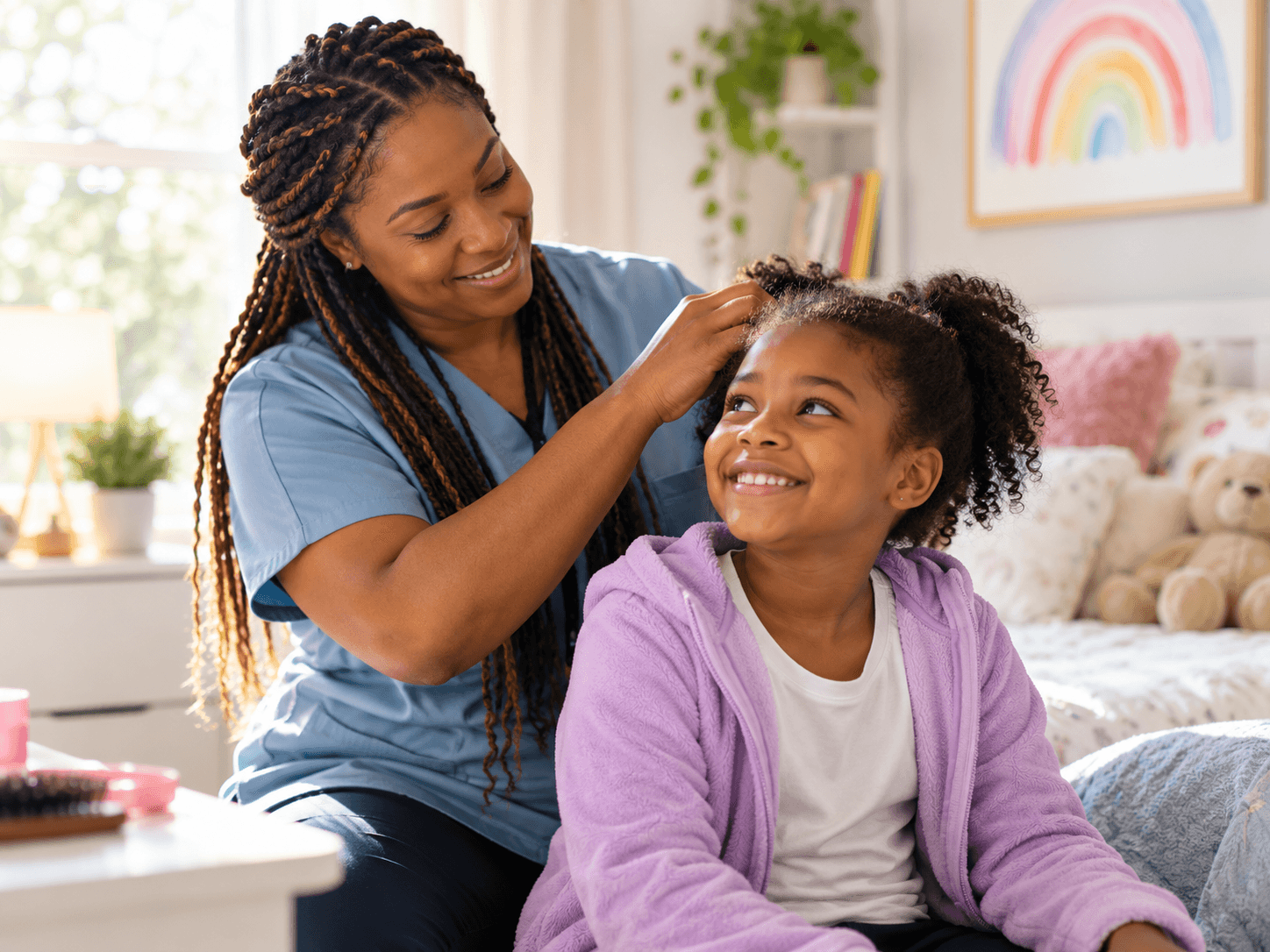
Personal care is the everyday work of helping a child through their day with dignity — getting washed and dressed, moving safely from bed to chair, eating, resting, being comfortable. For families caring for a child with significant needs, that work never really stops. Personal care support puts steady hands beside a parent so the day is easier on the child and on everyone holding it together.
- Hands-on help with daily activities such as bathing, dressing, grooming and toileting.
- Support with safe positioning, moving and transfers throughout the day.
- Help with the routines that keep a child comfortable, clean and cared for at home.
- Practical support for the family carrying that care day after day.
Who it is for
Who This May Help
Situations where families often ask about this kind of care. None of them establishes that a child needs it — that comes from their physician.
- A child may need physical help with bathing, dressing or personal hygiene.
- Some children cannot move or reposition themselves without assistance.
- A child may need support with eating, drinking or being positioned safely for meals.
- Some children need help staying comfortable and protected from skin breakdown or injury.
- A family may be handling lifting and transfers that have become difficult to manage alone.

Care at home
Common Tasks and Support Provided
What care may involve day to day, always following your child’s physician-ordered plan of care.
- Helping with bathing, dressing, grooming and toileting in a way that protects a child's dignity.
- Assisting with safe transfers, repositioning and use of mobility equipment.
- Supporting mealtimes and daily comfort routines.
- Keeping the child's immediate environment clean and safe for their needs.
- Noticing and reporting changes in skin, comfort or daily function to the care team.
Getting started
How In-Home Care Works
You do not need paperwork ready, and you do not need to know whether your child qualifies before you call.
- 1
You reach out
Call us, or request a screening online. You do not need paperwork ready, and you do not need to know whether your child qualifies.
- 2
We talk with you
A member of our team talks through your child's needs, your Medicaid situation, where you are in Georgia, and whether your child currently has a provider.
- 3
Nurse intake
If it looks like we may be able to help, a nurse meets with you and your family to complete the intake documentation together.
- 4
Submission to Medicaid
The GAPP request is submitted for review. This is the point at which the decision moves to Georgia Medicaid.
- 5
The decision, then care
Georgia Medicaid reviews the request. If services are approved, we work with you to begin care at home.




Questions
Frequently Asked Questions
Is personal care the same thing as nursing care?
They are different kinds of support and often work together. Personal care focuses on the hands-on help a child needs with daily living — bathing, dressing, moving, comfort. Skilled nursing focuses on clinical care such as equipment, medications and medical monitoring.
Can a child receive both personal care and skilled nursing?
Many medically complex children have needs that cross both. What a particular child receives is set by their physician orders and plan of care, and, where Medicaid is involved, by what has been authorized for that child.
Will this change how our household runs?
The goal is the opposite. Personal care is meant to fit into the routines a family already has, not to replace them. Families usually tell us what works for their child, and care is shaped around that.
Our child is older and values their privacy. Is that respected?
Yes. Dignity is central to personal care at every age. Care is provided in a way that respects a child's privacy, preferences and growing sense of independence, and older children are included in decisions about their own routine wherever possible.
Related guides and resources
- A Parent's Guide to Cerebral Palsy in Children
A lifelong difference in how the brain sends movement signals, affecting posture, balance and muscle tone.
- A Parent's Guide to Spina Bifida in Children
A difference in how the spine formed before birth, affecting movement, sensation and bladder and bowel routines.
- Your Guide to the Georgia Pediatric Program
What GAPP is, who it serves, how requests are reviewed, and how to start a conversation.
- The Parent Caregiver Pathway
What the parent caregiver route involves, and why it is not available to every family.
About this information
This page is general information for families, written in plain language by the WeLIVE Healthcare team. It is not medical advice and does not replace the judgment of your child’s physician, who knows your child. Always talk with your child’s care team about their specific needs.

Let's Build the Right Care Plan for Your Child.
Tell us a little about your child and our team will follow up to talk through what this care could look like at home.
Requesting a screening is not an application for Medicaid and does not determine eligibility.