
Enteral Feeding Support
Help at home with tube feeding routines for children who are fed through a G-tube or similar.
Overview
What This Service Includes
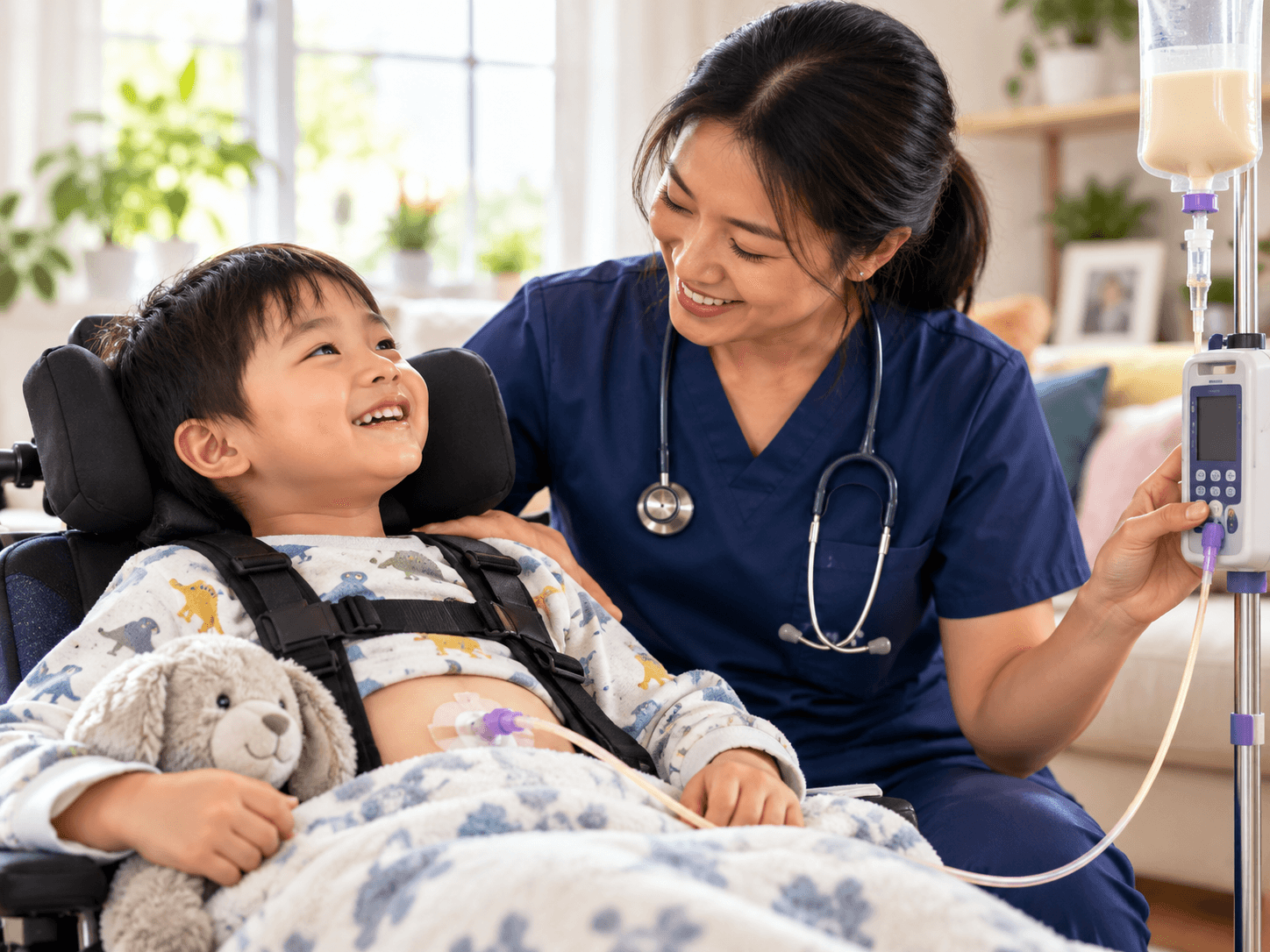
Feeding looks different for children who take nutrition through a tube, but it is still one of the most important parts of the day. Enteral feeding support helps families carry out the feeding routine a physician has ordered — setting up feeds, caring for the tube site, watching how a child tolerates nutrition — so the child is nourished and the routine feels manageable rather than daunting.
- Support at home with tube feeding for children who receive nutrition through a feeding tube.
- Care of the tube and the skin around it as part of the daily routine.
- Attention to how a child tolerates feeds, and to comfort during and after feeding.
- Feeding carried out according to the child's physician orders and plan of care.
Who it is for
Who This May Help
Situations where families often ask about this kind of care. None of them establishes that a child needs it — that comes from their physician.
- A child may receive some or all of their nutrition through a feeding tube.
- Some children have difficulty swallowing safely and need another route for nutrition.
- A child may tire quickly during feeds or take in less than they need by mouth.
- Some children need close attention to tolerance, comfort or the tube site during the day.
- A family may be managing a feeding schedule and pump routine at home.
Care at home
Common Tasks and Support Provided
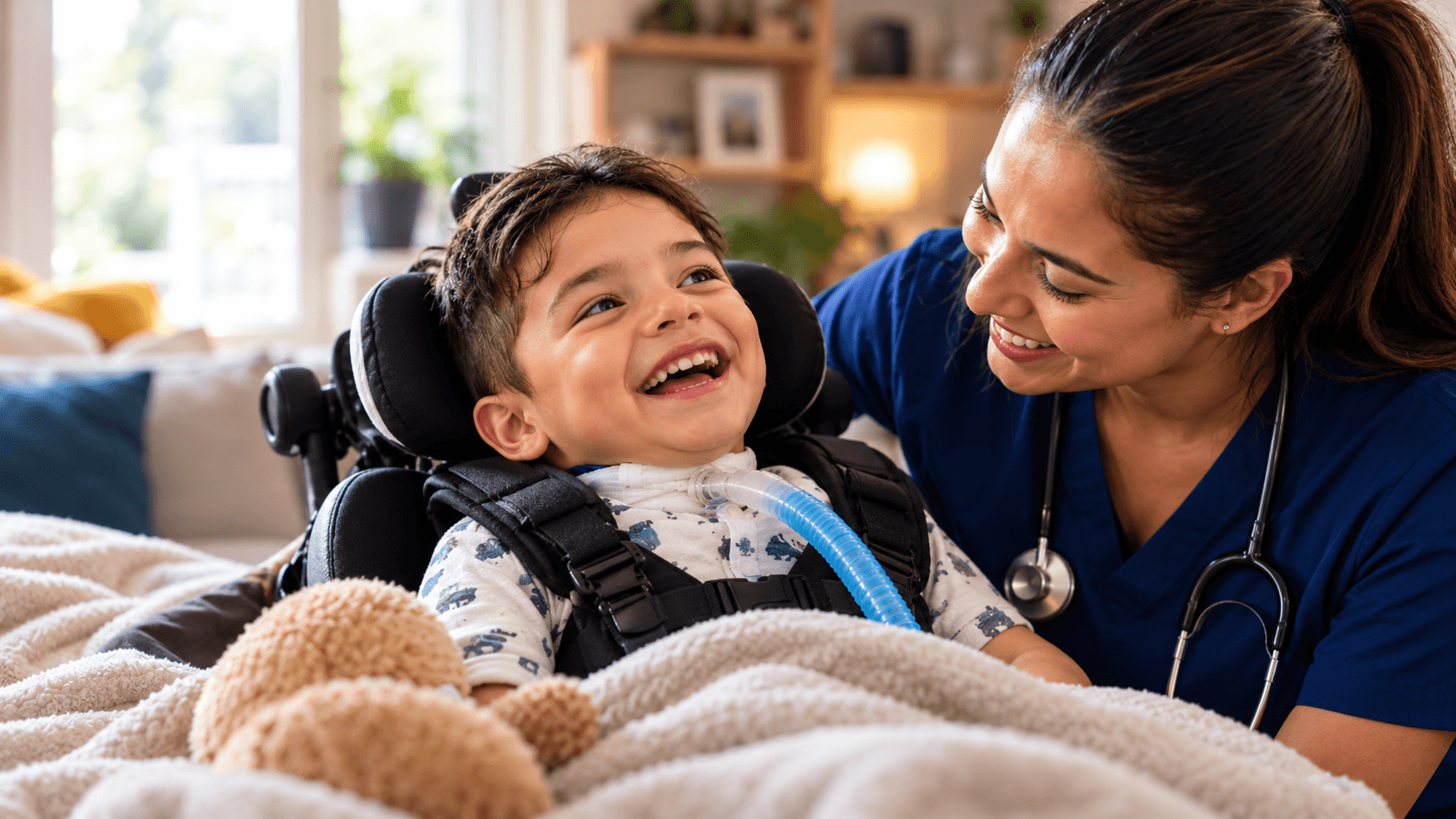
What care may involve day to day, always following your child’s physician-ordered plan of care.
- Preparing and running feeds as ordered, including pump and bolus routines.
- Caring for the tube and the surrounding skin, and watching for changes there.
- Observing how a child tolerates feeds, including comfort and any signs of difficulty.
- Keeping feeding supplies organized and the routine consistent across the day.
- Recording what a child received and passing that on to the family and medical team.
Getting started
How In-Home Care Works
You do not need paperwork ready, and you do not need to know whether your child qualifies before you call.
- 1
You reach out
Call us, or request a screening online. You do not need paperwork ready, and you do not need to know whether your child qualifies.
- 2
We talk with you
A member of our team talks through your child's needs, your Medicaid situation, where you are in Georgia, and whether your child currently has a provider.
- 3
Nurse intake
If it looks like we may be able to help, a nurse meets with you and your family to complete the intake documentation together.
- 4
Submission to Medicaid
The GAPP request is submitted for review. This is the point at which the decision moves to Georgia Medicaid.
- 5
The decision, then care
Georgia Medicaid reviews the request. If services are approved, we work with you to begin care at home.


Questions
Frequently Asked Questions
Can a child still eat by mouth if they have a feeding tube?
Some children do take food or drink by mouth alongside tube feeding, and others do not. That depends entirely on what is safe for the individual child, which is determined by their physician and the specialists involved in their feeding plan.
Who decides the feeding schedule and what goes through the tube?
The child's physician orders the formula, the volumes and the schedule, often with input from a dietitian. Care at home follows those orders rather than setting them.
What if our child seems uncomfortable during feeds?
Discomfort, changes in tolerance or anything new at the tube site is noticed, recorded and communicated to the family and the child's medical team, so adjustments can be considered by the people who order the feeding plan.
Can feeding support and nursing care happen together?
Often yes. For many medically complex children, feeding is one part of a wider plan of care that also includes medications, monitoring and other daily support. What a child receives is shaped by their orders and plan of care.
Related guides and resources
- A Parent's Guide to Down Syndrome in Children
A genetic condition caused by an extra copy of chromosome 21, with a wide range of abilities and health needs.
- A Parent's Guide to Spinal Muscular Atrophy in Children
A genetic condition affecting the nerve cells that control muscle movement, often involving breathing and feeding.
- Your Guide to the Georgia Pediatric Program
What GAPP is, who it serves, how requests are reviewed, and how to start a conversation.
- The Parent Caregiver Pathway
What the parent caregiver route involves, and why it is not available to every family.
About this information
This page is general information for families, written in plain language by the WeLIVE Healthcare team. It is not medical advice and does not replace the judgment of your child’s physician, who knows your child. Always talk with your child’s care team about their specific needs.

Let's Build the Right Care Plan for Your Child.
Tell us a little about your child and our team will follow up to talk through what this care could look like at home.
Requesting a screening is not an application for Medicaid and does not determine eligibility.