
Parent's guide
What Parents Should Know
A Parent's Guide to Spinal Muscular Atrophy in Children, in plain language. Open any question to read more.
By the WeLIVE Healthcare team
What is spinal muscular atrophy?
Spinal muscular atrophy, usually shortened to SMA, is a genetic condition affecting the motor neurons — the nerve cells in the spinal cord that send movement instructions to muscles. When those signals weaken, muscles get less use and become weaker themselves. Because it is genetic, it is present from birth even when signs appear later, and it is not caused by anything that happened during pregnancy or delivery.
SMA is described in types, based largely on when signs first appeared and what a child is able to do. The types differ substantially, and the field has changed a great deal in recent years, so information a family finds online may not reflect what their child's team is telling them now. Your neurologist is the right source for what your child's diagnosis means today.
How does it affect children day to day?
Muscles closer to the center of the body are usually affected more than hands and feet, so families often see a child who is alert, engaged and curious while having real difficulty with head control, sitting, or moving arms and legs against gravity. It is important to know that SMA does not affect intelligence. Children with SMA understand, learn and have plenty to say, and finding them a reliable way to say it is often a priority.
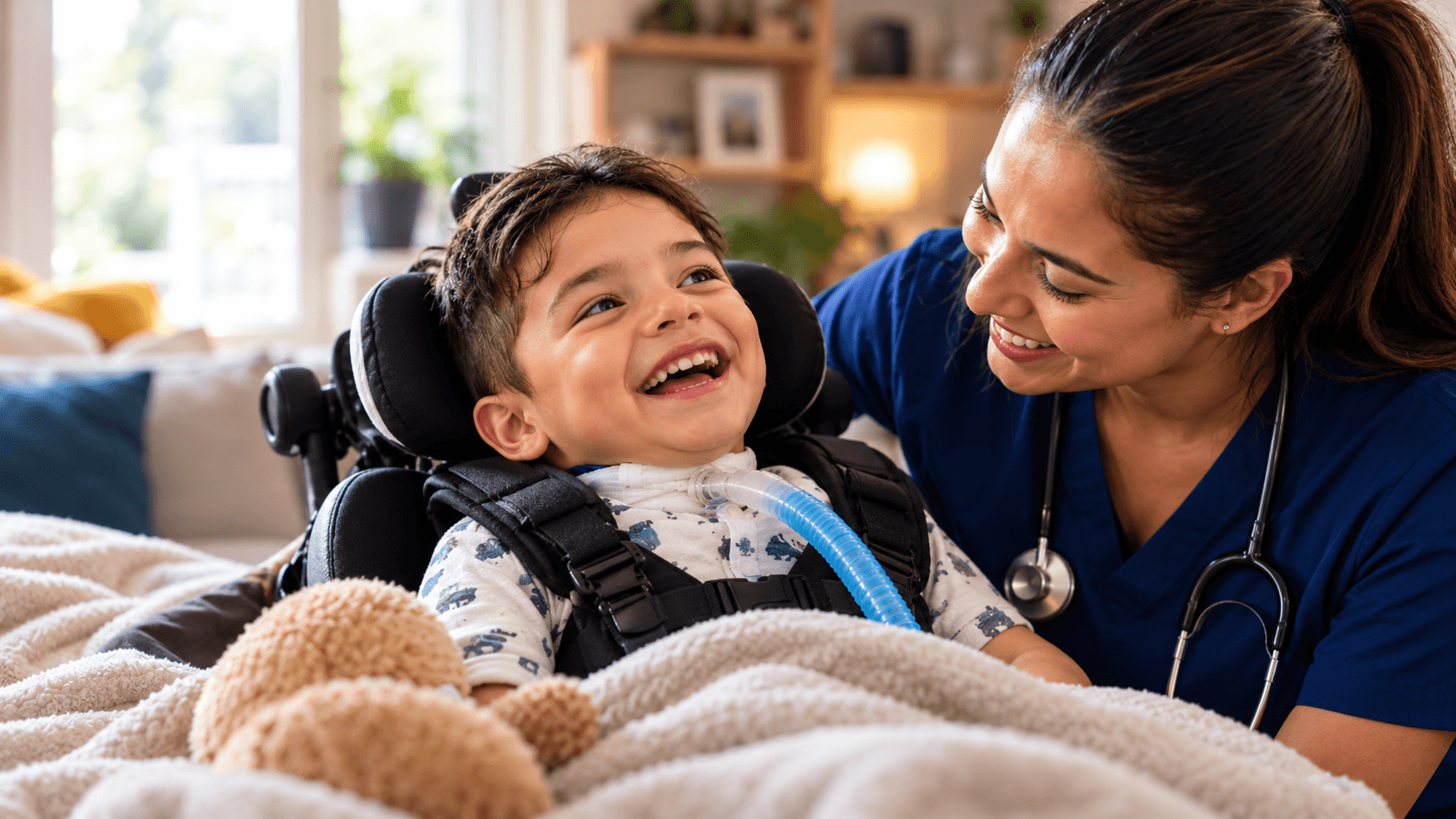
Breathing and swallowing muscles can be involved, and that is what shapes much of daily care. Cough strength, nighttime breathing, and whether eating is safe and efficient enough are followed closely by pulmonary and feeding teams. Many families use breathing support, airway clearance and tube feeding as ordinary parts of a day rather than as emergencies.
What do families often face at home?
- Airway clearance and breathing support run to a schedule, sometimes several times a day and through the night, and the equipment involved takes training, maintenance and a plan for power failures.
- Illness escalates quickly. A cold that another child shrugs off can mean hospital admission, so families live with a level of caution around germs that others sometimes find hard to understand.
- Feeding takes time or moves to a tube. Deciding about tube feeding is emotionally heavy for parents even when it makes a child safer and less exhausted, and families deserve space to work through it rather than being rushed.
- Positioning matters constantly. Without the strength to shift position independently, a child depends on someone else to prevent discomfort, pressure and joint problems, which means hands-on care throughout the day and night.
- Appointment and equipment load is high. Neurology, pulmonology, feeding, orthopedics, seating and communication teams all have a stake, and coordination almost always falls to a parent.
Does SMA affect my child's thinking?
No. SMA affects the nerve cells that control muscles, not intelligence, and children with SMA are as bright and aware as any other child. This matters practically as well as emotionally: assuming a child understands everything said in the room is both accurate and respectful, and getting a reliable communication method in place early is usually worth pushing for.
Why is so much attention paid to coughing?
Coughing is how the lungs clear themselves, and when the muscles that power a cough are weak, secretions can build up and infections settle in more easily. That is why airway clearance routines and equipment come up so often. Your child's pulmonary team should give you a specific plan for everyday care and for when your child is unwell.
Should my child have a feeding tube?
That is a decision for your family together with your child's medical team, and it depends on whether eating is safe, whether it takes so long that it is exhausting, and how your child's growth is going. Many parents describe relief afterward that mealtimes stopped being frightening, and many also describe grieving first. Both are normal, and there is usually time to ask every question you have.
What does home nursing look like for a child with SMA?
Where nursing is ordered, it often centers on respiratory support and airway clearance, tube feeding, positioning and monitoring, particularly overnight. What is authorized is decided by your child's physician and the reviewing program, not by us and not by the diagnosis. We can describe how skilled nursing usually works in a home so you know what to expect from the conversation.