
Parent's guide
What Parents Should Know
A Parent's Guide to Brain Injury in Children, in plain language. Open any question to read more.
By the WeLIVE Healthcare team
What is brain injury?
A traumatic brain injury is damage to the brain caused by an outside force — a fall, a car crash, a sports collision, or another impact. What makes it different from conditions a child is born with is that there was a before. Families are caring for a child they already knew, and part of what they carry is the distance between then and now. That grief is real and it is not a sign anyone is coping badly.
Because the brain does many different jobs, an injury can affect very different things depending on where and how severe it was. Movement, balance, speech, swallowing, vision, memory, attention, emotional control and sleep can each be touched, and a child can be strongly affected in one area and not at all in another. Two children with similar-sounding injuries can need completely different support.
How does it affect children day to day?
The changes people cannot see are often the hardest to live with. A child may walk and talk and look fine to relatives, while struggling to hold a thought, filter noise, manage frustration or get through an afternoon without exhaustion. Fatigue after brain injury is not ordinary tiredness, and it is frequently misread as laziness or bad behavior by people who mean well.
Recovery after brain injury is not a straight line. There are periods of rapid change and periods where nothing seems to move, and plateaus are not always permanent. Rehabilitation teams generally focus on function — what a child can do in their own life — rather than on a fixed end point, and the plan is expected to change as the child does.
What do families often face at home?
- The child who comes home is not the child who left, and families are grieving and providing hands-on care at the same time, usually without anyone naming the grief.
- Behavior and emotion can be part of the injury rather than a choice. Outbursts, flat affect, impulsiveness or a low frustration threshold are exhausting to live with and easy to misinterpret, especially for siblings.
- Fatigue shapes the entire day. A morning of therapy may use up everything a child has, and families constantly have to weigh rehabilitation, school and rest against each other.
- Routines and sensory load matter far more than before. Noise, crowds, screens and schedule changes that were once nothing can derail a day, and holidays and family gatherings become complicated.
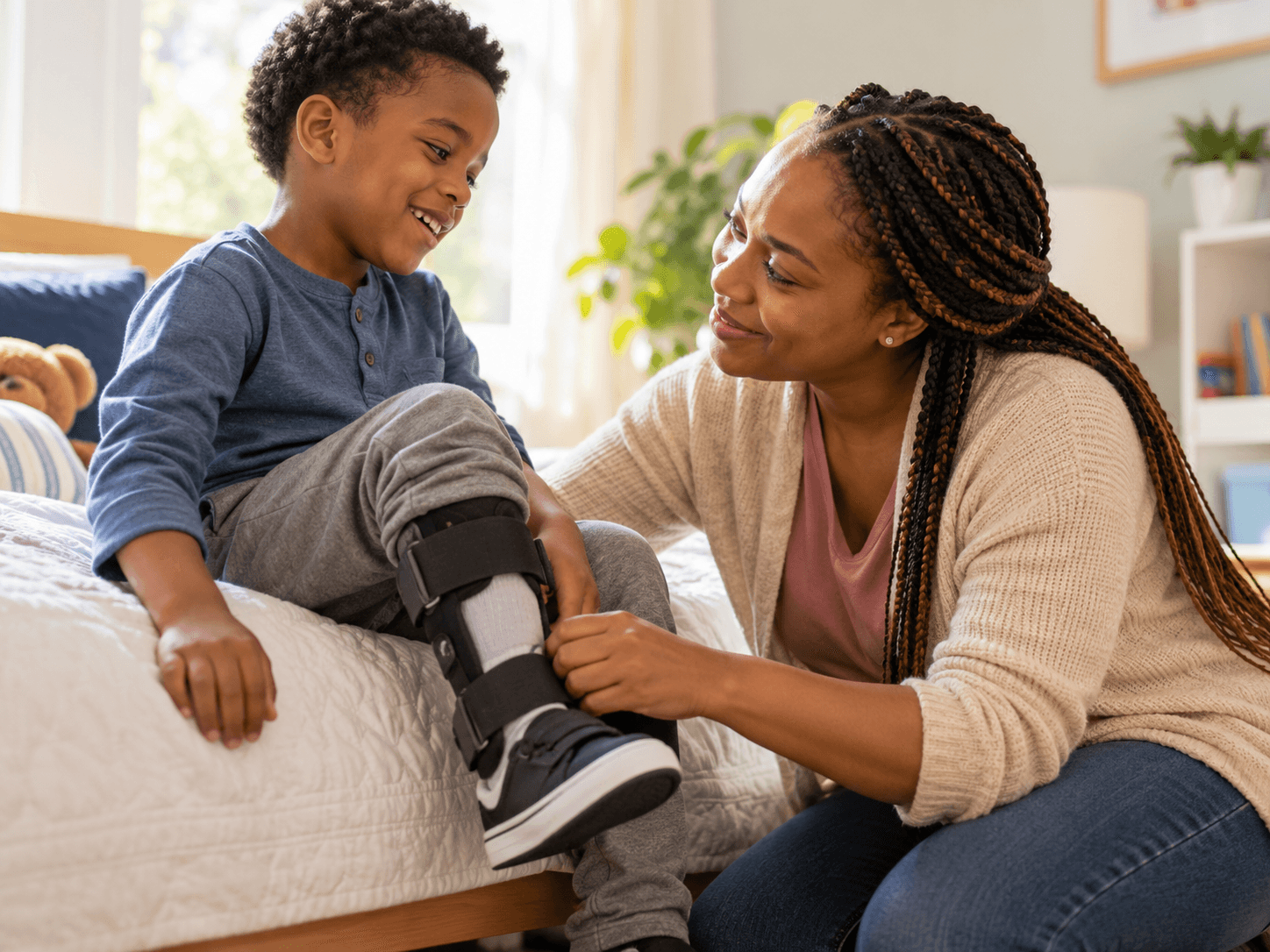
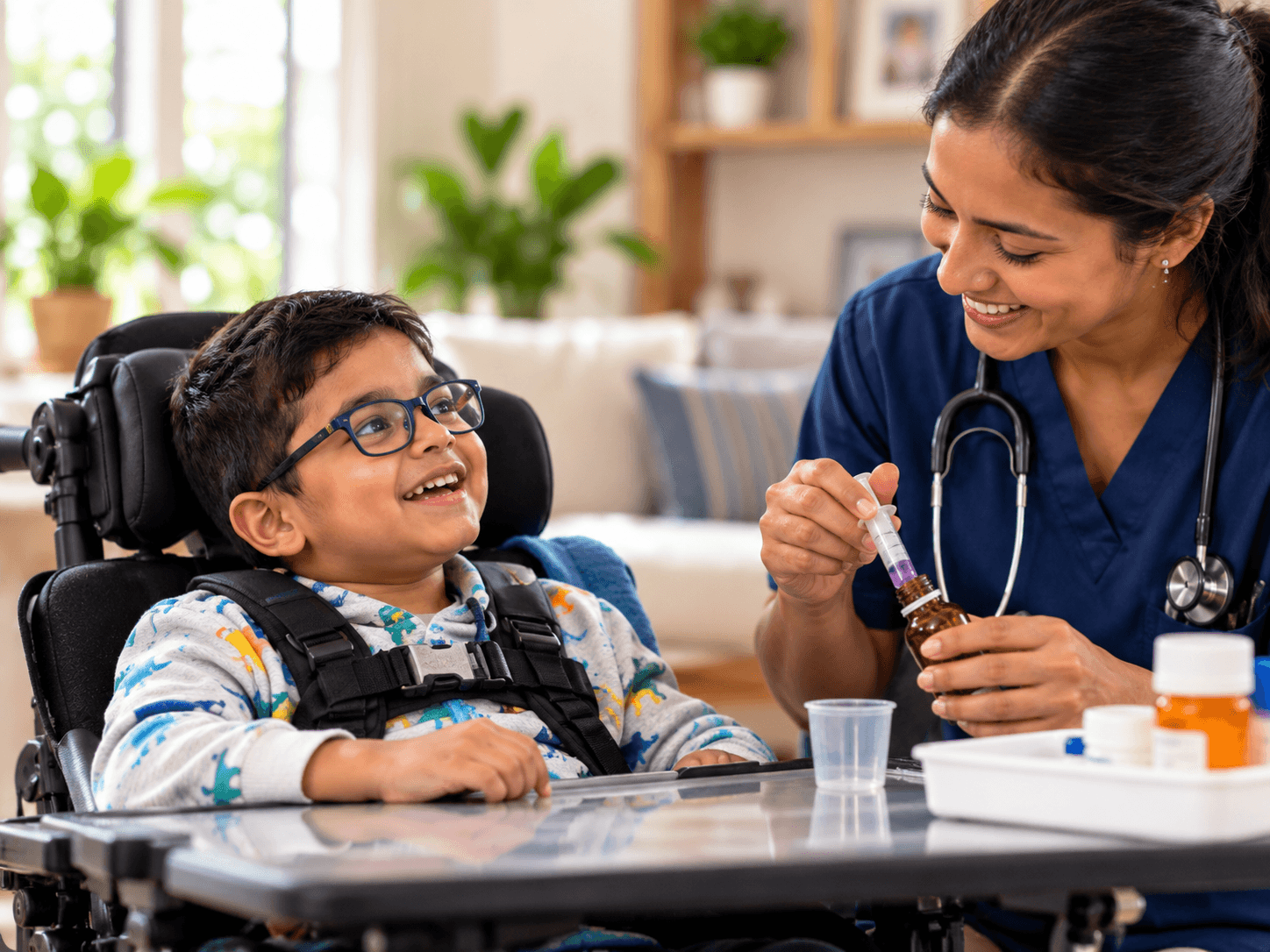
- Care needs can be heavy and unfamiliar all at once — transfers, feeding support, medication schedules and supervision — learned in a hurry during a hospital discharge rather than over years.
How much will my child recover?
No one can honestly tell you that, and you should be cautious of anyone who tries. Recovery depends on the injury, the child and time, and it often continues in smaller ways long after the dramatic early changes. Your child's rehabilitation team can tell you what they are seeing and what they are working toward next, which is usually a more useful conversation than a prediction.
My child looks fine but school says there are problems. What is happening?
This is extremely common after brain injury. Attention, memory, processing speed and emotional regulation can be affected while physical recovery looks complete, and people assume that a child who walks and talks normally is back to normal. A formal neuropsychological assessment is often what turns an invisible difficulty into something school can plan around.
Is the difficult behavior part of the injury?
It often is, at least partly. The parts of the brain that manage impulse, frustration and emotional control can be affected directly, and fatigue and overload make everything harder. That does not make it easy to live with. Raising it with your child's rehabilitation team is worthwhile, because behavior that has a neurological cause is usually approached very differently from behavior that does not.
Can home care support rehabilitation?
Support at home can help with the practical side of a day — personal care, transfers, safe eating, medication schedules and supervision — which can free a family up for the rest. What is ordered depends on your child's physician and the reviewing program, and we cannot tell you what your child needs or what any review will decide. We can explain what the day-to-day support generally looks like.